Presentation
Hope in a World of Crisis
These days you don’t have to look far to find crises. “Natural” disasters that were once rare, are happening more frequently, with increasingly severe results. This is not how things have to be, in fact there is nothing natural about these disasters - they are rather the direct result of water and land miss-management. What management you might ask? Draining the water away from the land, draining and developing the wetlands, disconnecting waterways from their floodplains, destroying the forests, and paving over the earth just to name a few. These actions all disrupt, damage, and degrade the water cycle. The natural consequence to such actions is flood, then followed by drought and fire. Human activity is damaging the Earth’s organs, the ecosystems that regulate our climate.
How widespread have such actions been? Over the last 10,000 years human activity has desertified ⅓ of earth’s land. How did this happen? How could such a relatively small organism create such a tremendous difference? Around 12,000 years ago in the Middle East humans domesticated the ox and invented the plow. With these two inventions extractive agriculture began. For the first time humans had a powerful ability to change the vegetative cover of the earth on a large scale, and keep it changed. This technology spread around the world leaving deserts in its wake - the Middle East, Northern Africa, the Tibetan plateau, the North American West, Australia. But destruction is only part of the human story, we also have a tremendous ability to restore, regenerate, and revitalize. We have a choice to create Desert or Rainforest.
The natural water cycle, the Full Water Cycle, is balanced and productive. For every ecosystem on Earth increasing interconnectedness results in increasing productivity. This results in a balanced and stable climate. The full water cycle is increasingly disrupted, leading to the Watershed Death Spiral. In this cycle flood, drought, and fire all intensify as the climate becomes increasingly extreme and erratic. We can reverse this cycle, and lead ourselves back towards the full water cycle, by Reviving the Water Cycle. This starts a flywheel of productivity, leading to prosperity and peace. Humans have disrupted the water cycle, but we can also catalyze its restoration by partnering with nature and working for water.
We can rebalance the Earth’s water budget through Decentralized Water Retention Landscapes. By creating space for water, establishing diverse vegetation, treating our waters and soils with care and respect, we can restore the health of our planet. This has been done all over the world. Our 10 Heroes of Water show some of our favorite examples, but there are many, many more. Our 9 Ways to Reverse Drought, Revive Rivers, and Reduce Flood and Fire, are just some of the many ways this work can be accomplished.
Decentralized Water Retention
Before and After
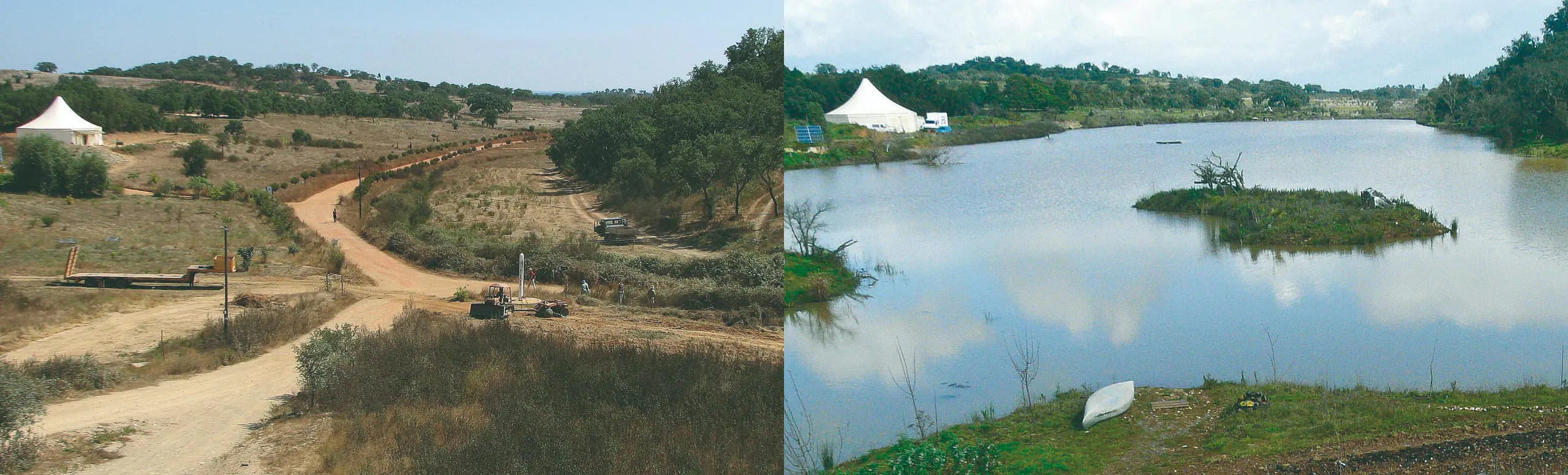
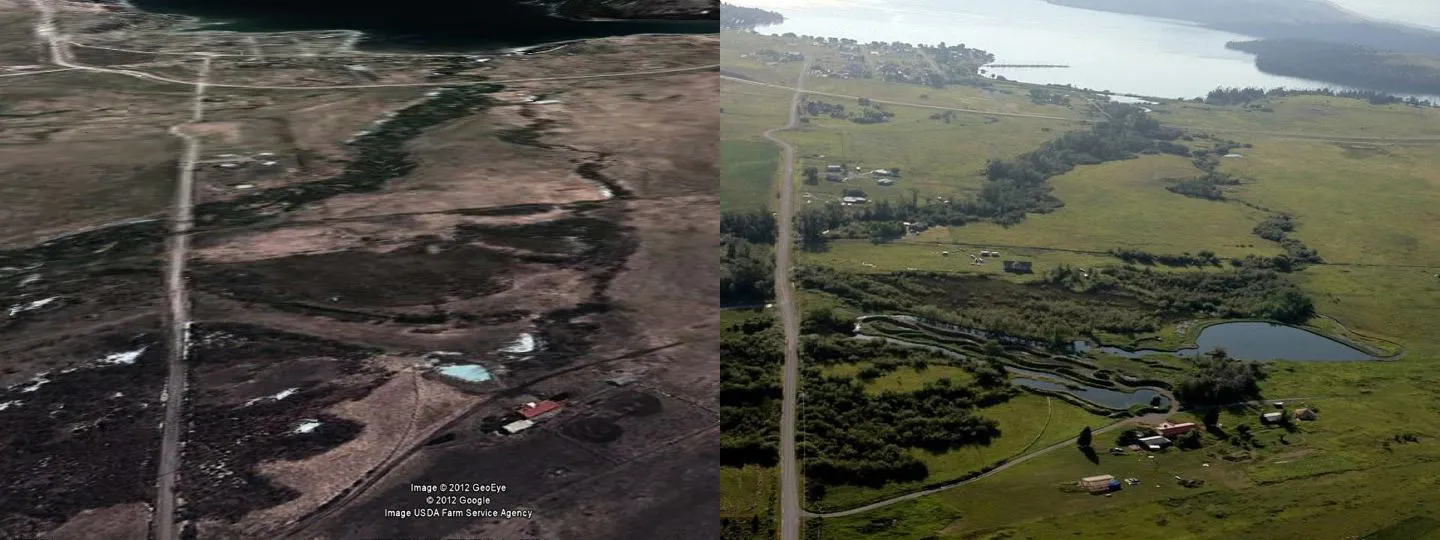
In the western world we are really good at symptom based medicine. When you have a runny nose, you treat the runny nose instead of the stress that is the root cause of the disease. I worry that right now we’re doing the same thing with climate change, focusing on the symptom, rather than the root cause of the problem. The root cause of flood, drought, fire, desertification, migration, and ecosystem collapse is water cycle disturbance. Somewhere between 4 and 20% of the global heat dynamics on earth are estimated to be regulated by CO2. But water? Water regulates 70-95% of the heat dynamics of our planet. Water is life, the elemental building block of life.
Sometimes I wonder if in our rapid adoption of reductionistic science we’ve lost all true understanding of the world. We reduce things down to the simplest terms so that we can more easily describe the complicated, but in the process we lose sight of the whole. In a way we are learning more and more about less and less, until we know absolutely everything about nothing at all.
An example of this, it is common knowledge in many indigenous cultures around the world that the forests call the rain. Western science thought this preposterous, that forests grow in regions with high rainfall, and that is why these people get so confused. But now the most advanced science is finding that indeed the forests do call the rain, producing the hygroscopic microorganisms accounting for up to 80% of the rainfall in the Amazon. If we cleared all of the forests, the rainfall could reduce by 80%. The Amazon would not become a savannah, but a desert. We need to carefully consider if we want the Amazon to remain forest, or become desert, and the impacts will not just be felt by the people of Amazonia. The forests act as a biotic pump, pulling water through the rest of the continent. If the forests disappear, so will the rainfall in the southern parts of the continent. Not only that but then the storm pressure builds along the Atlantic coast as a result, leading to more catastrophic hurricanes in other regions.
My plea to you is this, help rehydrate the earth’s body with blood. Hold water within the landscape, not just for you and your children, but for life. For water is life. Stand up, for yourself, for our co-living beings, the organisms with which we share this planet.
A future of extreme climate, disaster, scarcity, and crisis, or a future of balance, abundance, health and prosperity - it’s not a matter of chance, but rather a choice. So my question to you is simple - which future will you help create?